When most people imagine Sikkim, they think of winding mountain roads, snow-capped peaks, and quiet monasteries far from city noise. But the way you choose to travel here shapes what you truly experience. Private tours in Sikkim are different from large group journeys — they give you the time and space to connect deeply with the land, the people, and the culture.
In a place where every detour could lead to a story — a mountain lake, a centuries-old monastery, or a village festival — traveling privately ensures you don’t just pass by. You pause, you linger, and you feel at home.
The Value of Personal Connection
One of the greatest gifts of private travel is the chance to connect. You might share a home-cooked meal with a family, sit with a monk who explains Buddhist rituals, or learn how to weave traditional carpets from an artisan.
Travel today is less about “checking off” sights and more about creating memories. With a customized Sikkim journey, you choose when and how these real experiences unfold.
Exploring Hidden Corners of Sikkim
Large group tours often skip over the places that hold the most charm — the village of Lachen, the sacred Gurudongmar Lake, or the flower-filled meadows of Yumthang Valley.
Private tours, however, make space for these hidden corners. You might sip butter tea in a mountain home, walk through rhododendron forests, or spend a slow day wandering local markets. Each choice brings you closer to the Northeast at its most genuine.
Freedom to Create Your Own Journey
Private travel means shaping the rhythm of your days. Perhaps you want to trek one day, rest the next, or spend long hours in Gangtok’s cafes before heading into the mountains. This flexibility isn’t just about comfort — it’s about crafting a journey that feels personal and real.
Advantages of Going Private
Here’s why private tours in Sikkim feel more rewarding:
Discover hidden sites most group itineraries miss.
Stay longer in places that inspire you.
Share conversations with locals without being rushed.
Travel with guides who adjust the pace to your comfort.
These perks transform travel from simply “seeing” into genuinely “living” the experience.
Authenticity Beyond the Crowds
Many travelers say a place feels most authentic when you can step away from crowds. In Sikkim, that might mean listening to monks chant at dawn in Rumtek, watching prayer flags ripple in Tashiding, or sipping tea with a local family in a quiet village.
Private journeys create room for these unhurried moments — immersive yet stress-free, offering both comfort and authenticity.
Practical Tips for Private Tours in Sikkim
Permits: An Inner Line Permit (ILP) is required for North Sikkim and other protected areas. Travel operators can arrange this easily.
Best Time to Visit: March–May for rhododendron blooms, October–December for crisp skies and mountain views.
Cultural Etiquette: Dress modestly in monasteries, spin prayer wheels clockwise, and ask before photographing people.
Packing Essentials: Layered clothing, sturdy walking shoes, and some cash, as ATMs are limited in rural areas.
FAQs: Private Tours in Sikkim
Why choose a private tour in Sikkim instead of a group tour?
Private tours give you flexibility and authenticity. You travel at your own pace, connect with locals, and explore places that big groups often miss.
Do I need permits for private travel in Sikkim?
Yes, for regions like North Sikkim (Lachen, Lachung, Gurudongmar) and East Sikkim (Nathula Pass, Tsomgo Lake). These are arranged through registered operators.
What are the must-visit hidden places in Sikkim?
Yumthang Valley, Dzongu (for Lepcha culture), Gurudongmar Lake, and small monasteries like Tashiding and Enchey.
Are private tours more expensive than group tours?
They can cost slightly more, but the value lies in flexibility, personalized planning, and deeper cultural immersion.
Can I combine a Sikkim private tour with Bhutan or Northeast India?
Yes. Many travelers extend their journey to Bhutan, Darjeeling, or Arunachal. ClearEast Trip helps design cross-Himalayan routes tailored to your interests.
What’s the best season for private tours in Sikkim?
Spring (March–May) for flowers, autumn (September–November) for festivals and clear skies, and winter (December–February) for snowy landscapes (though some routes may close).
A Journey That Stays With You
Travel in Sikkim is more than moving from one destination to another — it’s about finding meaning in every moment. On a private tour, you don’t just see attractions; you live the culture, share in traditions, and build memories that remain long after the journey ends.
At ClearEast Trip, we design private journeys that balance comfort with authenticity. From arranging homestays to guiding, you through hidden valleys, we make sure your travel story in Sikkim feels unhurried, personal, and deeply real.
Travel in Bhutan is not just about going from one place to another. It is about finding stillness in monasteries, breathing mountain air, and discovering stories hidden in valleys and villages. That’s why choosing a personalized Bhutan journey makes such a difference — it shapes your days around you.
Unlike fixed group tours, where the schedule is set in stone, personalized travel allows flexibility and freedom. Each day feels meaningful because it matches your pace, your interests, and the kind of experiences you value.
The Value of Custom Planning
A Bhutan private tour is built around your choices. Want to hike deep into the Himalayas? Spend time at centuries-old monasteries? Or simply sit quietly in a farmhouse, watching life unfold around you? With custom planning, your journey adapts to you.
Every detail — from meals and stays to transport and activities — can be tailored. That flexibility is what makes custom travel so valuable. It doesn’t just create comfort; it creates space for connection.
Adventures That Match Your Style
Bhutan is a dream for adventurers, but adventure means different things to different people. For some, it may be rafting down rushing rivers or trekking to Tiger’s Nest Monastery. For others, it might be a quiet walk through valleys lined with prayer flags.
With a bespoke travel plan, your experiences match your energy, interests, and time. Whether it’s a sunrise hike, a scenic village stroll, or joining monks for evening prayers, the choice is always yours.
Practical Benefits of Personalized Travel
A custom Bhutan journey is not only inspiring — it’s practical. Personalized services ensure:
Flexible schedules you can adjust as you go.
Smooth guidance with permits and local rules.
Expert Bhutanese guides who know hidden trails and cultural insights.
Handpicked stays and transport arranged for comfort and authenticity.
Even when the mountains bring unexpected changes, your planner makes sure your journey stays seamless.
Why It Matters in Today’s Travel World
Travel today is no longer about “covering places.” People want experiences that feel personal and alive. In Bhutan, this is especially true. The country itself is rooted in balance and meaning — values that shine through when your trip is built around you.
A personalized Bhutan tour is not about luxury alone. It is about building connections: with the culture, with nature, and with yourself.
When to Visit Bhutan
Spring (March–May): Clear skies, blooming rhododendrons, and festivals like Paro Tshechu.
Autumn (September–November): Crisp air, harvest celebrations, and excellent trekking conditions.
Winter (December–February): Quiet, with snow-covered landscapes and fewer travelers.
Summer (June–August): Green valleys and rains that bring freshness to the countryside.
With a personalized travel planner, you can choose the season that best fits your style — whether it’s festive energy or serene landscapes.
Practical Travel Tips
Visa & permits: Required for all foreign travelers, arranged through licensed operators.
Clothing: Pack layers — weather shifts quickly, especially in the mountains.
Culture: Dress modestly in monasteries and always ask before taking photos.
Health: Roads are winding; if you’re prone to motion sickness, carry medication.
These small preparations make a big difference in keeping your journey smooth and respectful.
Why Choose ClearEast Trip for Bhutan
At ClearEast Trip, we don’t create fixed packages — we create journeys that feel personal and rooted. Our team combines local knowledge, experienced guides, and strong community ties to give you moments that stay with you.
From arranging a family dinner in a Bhutanese farmhouse to ensuring the best views at a monastery festival, we go beyond logistics. With us, Bhutan becomes more than a trip — it becomes your story.
FAQs: Personalized Travel in Bhutan
Why choose a personalized Bhutan tour over a group package?
Personalized tours give you flexibility, comfort, and cultural depth. Instead of following a fixed schedule, you can stay longer where it feels right, add experiences on the go, and travel at your own rhythm.
When is the best time to visit Bhutan?
Spring (March–May) and autumn (September–November) are the most popular, with clear skies and festivals. Winter offers peace and snow-capped beauty, while summer brings lush greenery.
Do I need a visa to travel to Bhutan?
Yes. All international travellers (except Indian, Bangladeshi, and Maldivian nationals) require a visa arranged through licensed Bhutanese operators. Additional permits are needed for certain regions.
Can I combine Bhutan with Sikkim or Northeast India?
Yes. Many travelers plan cross-Himalayan journeys, combining Bhutan with Sikkim or Northeast India. With ClearEast Trip, you can design a route that flows naturally across borders.
Are personalized Bhutan tours more expensive?
They can be slightly higher in cost than fixed packages, but the value is in flexibility and authenticity. You pay for experiences tailored to you — not for a one-size-fits-all trip.
What cultural etiquette should I know in Bhutan?
Dress modestly in monasteries, avoid pointing at religious objects, and always ask before taking photos of people. Showing respect is deeply valued in Bhutanese culture.
A Journey That Stays with You
Every traveler wants to return home with stories worth sharing. In Bhutan, those stories aren’t about how many places you visited, but how deeply you connected to each one.
With ClearEast Trip’s personalized travel services, every day in Bhutan is unhurried, flexible, and real. Because in the end, unforgettable journeys aren’t about itineraries — they’re about the way a place makes you feel.
The Northeast is a land of quiet valleys, ancient traditions, and landscapes that feel untouched by time. Beyond the well-known attractions, this region holds secrets waiting for those who are willing to travel a little deeper — hidden lakes, villages where old ways thrive, and trails known only to locals.
For first-time visitors, planning a journey here takes care and insight. Distances are long, routes are winding, and the best experiences often sit far from tourist circuits. With the right guidance, you’ll discover that the “Seven Sisters” (and their Himalayan neighbor, Sikkim) reveal their beauty slowly, rewarding those who travel with patience.
Mystical Waterfalls and Rivers
Water defines much of the Northeast’s beauty. Picture yourself standing before Nohkalikai Falls in Cherrapunji — India’s tallest plunge waterfall — or floating gently along the Siang River in Arunachal Pradesh, surrounded by forested hills.
Many rivers here carve through deep valleys, their banks dotted with quiet villages. Away from crowded routes, hidden trails lead to cascades and streams where you can sit in silence, hearing only the rush of water and the call of birds.
Cultural Corners and Villages
The true heart of the Northeast lives in its villages. Each state has its own traditions — handwoven shawls in Nagaland, bamboo craft in Tripura, or rhythmic dances during the Hornbill Festival.
Staying in a community homestay, eating meals cooked on open hearths, or joining a village celebration lets you experience culture not as a performance, but as daily life. These moments connect you directly with people, their skills, and their stories.
Serene Hills and Scenic Landscapes
Rolling hills and tea gardens stretch across Assam and Nagaland, while valleys like Dzongu in Sikkim remain quiet sanctuaries, hidden under drifting clouds.
Here, you can take peaceful hikes through pine forests, stargaze under clear skies, or simply watch mist rise over green slopes. Many of these places see few visitors — and that’s what makes them special. With local knowledge, you’ll find trails and villages not marked in guidebooks.
Wildlife and Nature Reserves
The Northeast is home to some of India’s richest biodiversity. While Kaziranga in Assam is famous, lesser-known reserves like Dibru-Saikhowa and Namdapha National Park shelter rare species in remote, pristine habitats.
Here you can:
Spot hornbills and other rare birds.
Walk quiet forest paths.
Stay in eco-lodges near wildlife zones.
Support community-led conservation efforts.
For nature lovers, these places offer both wonder and responsibility — a way to experience wild beauty while supporting its preservation.
Traditional Cuisine and Local Flavors
Food is one of the most memorable ways to discover the Northeast. Each state has its own table: steaming momos in Sikkim, smoky pork curries in Nagaland, tangy fish dishes in Assam, or sweet fried pukhlein in Meghalaya.
Beyond restaurants, the real joy is eating with families or in village kitchens, where recipes are passed down quietly across generations. Every meal becomes both a taste and a story — and by eating local, you also support small farmers, cooks, and artisans.
FAQs: Hidden Gems of Northeast India
What are some hidden places to visit in Northeast India?
Lakes like Mehao in Arunachal, Dzongu Valley in Sikkim, the living root bridges of Meghalaya, and community villages in Nagaland are just a few of the lesser-known highlights.
How can I explore beyond the popular tourist spots?
The best way is with local guidance. Private and personalized tours give you access to villages, homestays, and trails that are not on regular tourist circuits.
Is Northeast India safe for offbeat travel?
Yes, the region is welcoming and safe, though some areas are remote. Traveling with a knowledgeable planner ensures smooth permits, transport, and local support.
What’s the best time to explore hidden gems in the Northeast?
Spring (March–May) and autumn (September–November) are ideal for weather and festivals. Monsoon (June–August) makes waterfalls spectacular but brings heavy rains, while winter offers quiet charm in some valleys.
Can I combine multiple states in one trip?
Yes. Many travelers combine Assam with Meghalaya, Nagaland with Manipur, or Sikkim with Arunachal. With ClearEast Trip, itineraries are designed so your route feels natural and manageable.
Will I need permits to visit hidden spots?
Yes, certain areas (like Arunachal, Nagaland, and parts of Sikkim) require special permits. These can be arranged easily through licensed operators and itinerary planners.
A Journey of Hidden Treasures
Traveling the hidden trails of the Northeast is unlike any other journey. It’s not just about reaching waterfalls, valleys, or villages — it’s about slowing down enough to notice the details: the weave of a shawl, the echo of a bamboo flute, the warmth of tea shared by strangers.
At ClearEast Trip, we specialize in journeys that uncover these quiet treasures. With our personalized planning, you can step beyond tourist maps into places that feel deeply real and unforgettable.
We don’t sell fixed packages; we design experiences that reveal the best-kept secrets of the Northeast — gently, personally, and at your own pace.
When you think of Northeast India, the first images are often mountains, tea gardens, and waterfalls. But there’s another side to the region — its festivals. These celebrations bring entire communities together through music, dance, rituals, and food.
Attending a festival here isn’t just about watching; it’s about taking part. Each one carries centuries of tradition, connecting you to the spirit of the people and the landscapes they live in. For travelers looking beyond the ordinary, these offbeat festivals are windows into the soul of the Northeast.
Hornbill Festival: Nagaland’s “Festival of Festivals”
Held every December, the Hornbill Festival is often called the “Festival of Festivals” — and for good reason. Across ten vibrant days, Nagaland comes alive with dance, music, craft exhibitions, and food stalls.
Here you can watch warrior dances, taste smoky pork grilled with bamboo shoots, and explore tribal jewelry made by hand. The festival blends tradition and modernity, making it one of the best ways to understand the diverse culture of Nagaland in one place.
Ziro Festival of Music: Soundscapes in the Valley
Imagine camping in golden rice fields surrounded by pine-covered hills, with independent bands from across the world playing under the open sky. That’s the Ziro Festival of Music, held in Arunachal Pradesh every September.
Known as India’s most eco-conscious music festival, Ziro offers more than just music. You can share rice beer with locals, meet the Apatani tribe, and learn how their ancient farming methods sustain the environment. It’s as much a cultural exchange as it is a musical experience.
Wangala Festival: The 100 Drums of Meghalaya
In November, the hills of Meghalaya echo with the sound of a hundred drums during the Wangala Festival, dedicated to the Sun God. The rhythm is powerful — you don’t just hear it, you feel it.
Men and women in traditional attire perform dances of gratitude for the harvest. The Wangala is not just a festival; it is a reminder of the Garo people’s deep bond with nature, celebrated through music, dance, and prayer.
Sangai Festival: Manipur’s Celebration of Culture and Nature
Every November, Manipur hosts theSangai Festival, named after the rare Sangai deer found only in Keibul Lamjao National Park. This unique festival brings together culture, conservation, and community.
Highlights include:
Folklore performances and storytelling
Martial arts demonstrations like Thang Ta
Boat races on Loktak Lake
Handloom and craft exhibitions
Food stalls serving Eromba and Chak-hao (black rice pudding)
The Sangai Festival is a celebration of both tradition and biodiversity — reminding visitors that culture and nature are inseparable in Manipur.
Losar Festival: A Colourful New Year in Arunachal Pradesh
In the cold winters of Arunachal Pradesh, the Losar Festival (Tibetan New Year) warms hearts and homes. Celebrated in Tawang and surrounding areas, it brings days of prayer, dance, and feasting.
Families gather over butter tea and Khapse (crispy fried pastries), monks chant at dawn, and prayer flags flutter across snowy ridges. Losar is as much about community as it is about celebration — a moment when the Monpa people open their homes and hearts to visitors.
FAQs: Festivals of Northeast India
What are the most famous festivals of Northeast India?
The Hornbill Festival (Nagaland), Ziro Festival of Music (Arunachal), Wangala Festival (Meghalaya), Sangai Festival (Manipur), and Losar (Arunachal) are among the most unique cultural celebrations.
When is the best time to visit Northeast India for festivals?
Most festivals take place between September and December, coinciding with harvests and clear weather. Hornbill (December) and Ziro (September) are especially popular.
Do I need special permits to attend these festivals?
Yes, some festivals in Arunachal Pradesh, Nagaland, and certain border areas require Inner Line Permits (ILP) or Protected Area Permits (PAP). These can be arranged through licensed operators.
Are these festivals suitable for families?
Absolutely. Most festivals are community events that welcome all ages. Children especially enjoy the music, dances, and food.
Can I combine multiple festivals in one trip?
Yes. With careful planning, you can attend back-to-back events (e.g., Sangai and Hornbill in November–December). ClearEast Trip helps create itineraries that align with festival dates.
How should I prepare to attend a festival in the Northeast?
Carry warm clothes (many festivals are in hill regions), respect local customs, and travel with flexibility. Staying in community homestays often enhances the experience.
A Journey Through Festivals
Festivals in Northeast India are more than spectacles — they are experiences of belonging. They invite you to sit with locals, taste food made for celebration, and witness traditions that have carried meaning for centuries.
At ClearEast Trip, we design journeys that take you into these moments — responsibly, respectfully, and with care. Whether it’s the drums of Wangala, the songs of Ziro, or the rituals of Losar, we help you experience them not as an outsider, but as a welcomed guest.
We don’t sell fixed packages; we craft cultural journeys that let you celebrate, learn, and connect in ways that stay with you long after the festival ends.
In the Eastern Himalayas, travel is no longer about luxury in the usual sense. Here, a new kind of richness is emerging — where journeys are slower, nature is respected, and communities are central. Travelers today look for experiences that are immersive, responsible, and meaningful.
From staying in a village homestay to trekking through rhododendron forests, eco-friendly travel in the Northeast isn’t just about where you go — it’s about how you go.
Embrace Village Life Through Homestays
One of the best ways to travel responsibly is through Sikkim’s village homestays. Waking up in a family home, eating food grown in organic gardens, and learning how to weave, cook Momo, or work in the fields — these are experiences that turn travel into connection.
Guests often say the friendships they form with their hosts are the most memorable part of their stay. A homestay isn’t just a bed for the night; it’s a window into daily life.
Explore Nature Responsibly
The Eastern Himalayas are home to orchids, red pandas, and ancient forests. Protecting these fragile ecosystems means choosing travel options that give back: guided treks on low-impact trails, eco-lodges powered by solar energy, or supporting organic farms that preserve traditional methods.
Many villages in Sikkim now use rainwater harvesting and solar power — small steps that keep the balance between people and nature. By choosing eco-conscious tours, you play a part in conservation while enjoying landscapes at their purest.
Unique Cultural Experiences
Eco-friendly travel is also about cultural respect. Join a family during Losoong, Sikkim’s harvest festival, or sit quietly in a monastery while monks chant at dawn. Take part in a folk dance under the stars or join a cooking class where locals teach you, their recipes.
Some experiences that blend culture and sustainability include:
Guided nature walks and birdwatching
Hands-on craft workshops with artisans
Visits to monasteries and heritage sites
Shared meals in family kitchens
These are not staged encounters; they are ways to connect meaningfully with people and their traditions.
Sustainable Adventures in the Himalayas
Adventure here doesn’t mean harming the environment. Treks through rhododendron valleys, kayaking on pristine rivers, or cycling on mountain trails can all be done with guides who ensure minimal impact.
As you journey, you’ll see how conservation and adventure can go hand in hand — letting you experience the Himalayas while leaving them as unspoiled as you found them.
Support Local Economies
Every rupee spent on a homestay, a handmade bamboo product, or organic tea from a village garden directly supports families and helps preserve traditions. Eco-friendly tours ensure that your travel dollars circulate within communities rather than bypassing them.
In this way, sustainable tourism becomes more than an idea — it becomes a livelihood for locals and a chance for traditions to survive into the future.
Hidden Trails Beyond the Tourist Map
The Eastern Himalayas are full of quiet routes that most travellers never see. Beyond the towns, small villages and forest paths reveal another world: rhododendron groves in bloom, rare Himalayan birds, and stories carried by local guides who know the land better than any book.
With ClearEast Trip’s network of local hosts and guides, you can safely explore these hidden trails, traveling with trust and authenticity.
Why Travel with ClearEast Trip
At ClearEast Trip, we believe travel should be easy, personal, and responsible. We take care of the details — from Inner Line Permits to handpicked homestays — so you can focus on the experience.
Our eco-friendly journeys balance comfort with authenticity, blending cultural immersion with respect for the land. For us, it’s not just about planning trips; it’s about helping you give back to the Himalayas while creating memories that last
FAQs: Eco-Friendly Travel in the Eastern Himalayas
What makes eco-friendly tours in the Eastern Himalayas different?
They focus on sustainability — staying in village homestays, supporting local economies, and traveling with low impact on fragile ecosystems.
Are eco-friendly tours less comfortable?
Not at all. Many eco-stays balance comfort with authenticity, offering clean, cozy rooms, organic meals, and warm hospitality while staying rooted in local culture.
What kind of activities can I do on an eco-tour?
Guided treks, birdwatching, cultural workshops, cycling, kayaking, and attending local festivals are all part of eco-friendly journeys.
Can eco-friendly tours be combined with adventure?
Yes. Adventure activities like trekking or rafting are included — but planned in ways that respect the environment.
Do eco-tours really help local communities?
Yes. Money spent on homestays, crafts, and farms goes directly to families, helping preserve traditions and provide livelihoods.
What’s the best time for eco-friendly travel in the Eastern Himalayas?
Spring (March–May) and autumn (September–November) are ideal for clear skies, festivals, and trekking. Winter offers snow and quiet, while monsoon makes forests lush but travel more challenging.
A Journey That Gives Back
Eco-friendly travel in the Eastern Himalayas is about more than seeing new places. It’s about living with nature, connecting with people, and leaving the land a little better than you found it.
With ClearEast Trip, every journey combines comfort, culture, and care for the earth. Because in the Himalayas, the best journeys are those that give back.
Food in Northeast India is never just about eating — it’s about culture, history, and community. Each state has its own unique flavors shaped by the land and the people. From the tang of bamboo shoots to the warmth of slow-cooked curries, food here is storytelling on a plate.
When you travel across the Northeast, you don’t just see the region — you taste it, share it, and live it. With a thoughtfully planned journey, you can explore bustling markets, sit down for meals in family kitchens, and even cook with locals. A private tour in Sikkim or beyond makes every meal more than just food — it becomes part of your story.
Sikkim: A Himalayan Food Haven
Sikkim may be small, but its cuisine is rich and diverse. Influenced by Nepali, Bhutanese, and Tibetan traditions, Sikkim’s specialties include steaming momos and hearty thukpa.
Imagine warming up with a bowl of noodle soup in a mountain village or tasting fresh momos from a busy stall in Gangtok. With the help of a local guide, you can also visit tea estates, stay with families, and join them in cooking — experiences that bring you closer to the culture.
On a ClearEast Trip private tour, these hands-on moments are what make travel personal and memorable.
Assam: Tea and Traditional Delights
The world knows Assam for its tea, but the state’s food is just as remarkable. A traditional Assamese meal might feature tangy fish curry, soft pitha (rice cakes), stir-fried bamboo shoots, and steaming rice.
Visiting tea estates, you’ll see workers still handpicking leaves, before sitting down for a farm-to-table dinner in a family kitchen. The freshness of ingredients is central here — food is not just nourishment, it’s part of Assamese identity and hospitality.
Nagaland: Smoked, Spiced, and Bold
Naga food is bold, earthy, and unforgettable. Smoked pork, fermented bamboo shoots, and fiery chili pastes dominate the table. Meals here are often cooked over earthen stoves in clay pots, keeping centuries-old methods alive.
Some must-try dishes include:
Smoked pork with bamboo shoot
Fiery chili chutneys
Sticky rice with fermented fish
Stews slow-cooked in clay
Picture yourself in a tribal village, tasting pork smoked for days over wood fires or trying chili pickles that stay with you long after the meal. Nagaland’s food is an adventure in itself.
Manipur: Fresh and Herb-Rich
Manipuri food is lighter than its neighbors’, with flavors built around herbs, greens, and freshness. A signature dish is Eromba — a comforting mix of vegetables, fermented fish, and chiles.
Exploring Imphal, you’ll find lively markets, family-run eateries, and opportunities to cook with locals. Meals here feel deeply personal, revealing how food ties into everyday culture and tradition.
Meghalaya: Where Simplicity Shines
In Meghalaya, food is simple yet layered with flavor. Daily staples include sticky rice, bamboo shoot curries, and sour chutneys. Among the Khasi people, Jadoh (a rice and meat dish) is beloved, while Pukhlein (sweet fried rice cake) brings warmth to gatherings.
Guided experiences in Shillong and Cherrapunji uncover hidden kitchens and small vendors often missed by tourists. And beyond tasting, you’ll also learn how smoking and fermenting remain part of traditional cooking.
FAQs: Culinary Trails of Northeast India
What makes the food of Northeast India unique?
Each state has its own identity, shaped by its people and environment. Fermentation, smoking, bamboo shoots, and fresh herbs are central, making it very different from mainstream Indian cuisine.
Is Northeast Indian food always spicy?
Not at all. While Nagaland and Manipur are famous for their chili heat, states like Sikkim and Meghalaya offer lighter, more balanced flavors.
Can vegetarians enjoy food in Northeast India?
Yes. While meat and fish are common, vegetarian dishes like thukpa, pitha, bamboo shoot curries, and herbal salads are widely enjoyed. In village stays, families are happy to prepare vegetarian meals.
By joining guided private tours or cultural journeys. At ClearEast Trip, we take you to local markets, arrange family meals, and offer hands-on cooking experiences that go beyond restaurant dining.
When is the best season for a food journey?
Spring (March–May) and autumn (September–November) bring festivals, harvests, and fresh produce. Winter is also beautiful, though high-altitude regions can be challenging due to snow.
Do I need permits for food trails in Northeast India?
For most of Assam, Meghalaya, and Nagaland, no. But certain regions of Sikkim, Arunachal Pradesh, and Nagaland require permits (PAP/ILP). These can be arranged easily through registered travel planners like us.
A Journey of the Senses
Traveling through Northeast India’s kitchens is a journey for every sense. You’ll hear the crackle of roadside grills, breathe in smoky curries, and taste recipes passed down for generations.
At ClearEast Trip, we believe food is one of the most honest ways to connect with culture. That’s why our journeys are personal, flexible, and unhurried — letting you eat with families, share local kitchens, and truly understand the story behind every dish.
We don’t sell fixed packages; we create experiences that stay with you. If Northeast India’s flavors are calling, let’s shape a journey that’s yours alone — one meal, one smile, and one memory at a time.
When you think of India’s eastern frontier, what comes to mind? Yes, we are talking about Arunachal Pradesh. It is true that for many people, this North Indian state still feels like a land wrapped in mist; distant, unexplored, and full of cultural depth.
But, do you know what the best part is? Arunachal itself offers unmatched raw beauty. It is the place that does not always appear on mainstream travel guides but holds stories of tribes, monasteries, and rivers that shape the land.
In this guide, we will take you through a seven-day Arunachal itinerary, starting from Delhi and weaving through some of the hidden gems of Northeast India.
How to Reach Arunachal Pradesh From Delhi?
By Air
It is the most convenient and easy way to reach Arunachal from Delhi. IndiGo is the only carrier operating direct flights on this route, which will take around 3 hours to reach. Otherwise, you can also get many connecting flights to reach Arunachal Pradesh from Delhi, which will take around 9 to 10 hours depending on the operator you choose.
By Train
You can also opt for the 28 to 30-hour train journey from Delhi to Guwahati. It will provide a grounded start to Arunachal, with changing landscapes that include plains, tea estates, bamboo groves, rivers, and the Brahmaputra shimmering at sunset. All of these will welcome you into Assam’s lush greenery before finally arriving in Guwahati, the vibrant gateway to Northeast India.
After reaching Guwahati, you can take the Arunachal Pradesh road trip, which will take 6 to 8 hours depending on the entry point. Guwahati to Bhalukpong (gateway to Arunachal Pradesh) is approximately 240 km, a 6–hour drive by road. If you are heading towards Itanagar, it is about 320 km, 7 to 8 hours.
Important Reminder: Indian citizens require an Inner Line Permit (ILP) to enter Arunachal. Foreign travellers need a Protected Area Permit (PAP). Apply online in advance to avoid last-minute delays.
7-Day Arunachal Itinerary in Detail
Day 1: Delhi to Dibrugarh, Drive to Roing
Your journey to the Northeast will begin on day 1 as you fly from Delhi to Dibrugarh, the gateway to Arunachal Pradesh. After landing, you need to cross the mighty Brahmaputra River, a lifeline of Assam, before entering the stunning landscapes of Arunachal.
From Dibrugarh, you can opt for a scenic road trip to reach Roing. Located in the Dibang Valley, this is an ideal destination for those who want offbeat northeast India travel experiences.
On the way, you can stop at the Mehao Wildlife Sanctuary. It is a pristine natural reserve spread across dense forests, famed for its orchids, medicinal plants, and exotic species. This sanctuary is also home to the rare hoolock gibbon, the only ape species found in India.
You can also visit the Mehao Lake, located inside the sanctuary at an altitude of around 3,000 feet. It offers a serene setting for birdwatching, with the reflections of the hills creating a postcard-perfect view.
After that, you can unwind at the Iphi-Pani Ghat, a peaceful riverside destination in Arunachal Pradesh along the Dibang River.
Day 2: Roing to Pasighat, Gateway of Arunachal
Your journey will continue from Roing to Pasighat. This road trip itself will be a memorable experience as you travel along the scenic Dibang and Siang rivers, with breathtaking views of the Eastern Himalayas accompanying you throughout the route.
Once in Pasighat, do not forget to visit the Siang River. It is famous for river rafting in Arunachal Pradesh on its Grade III and IV rapids that test both skill and courage.
If you are a nature lover, visit Daying Ering Wildlife Sanctuary, a paradise for birdwatchers and photographers. It is home to migratory birds like hornbills, cranes, wild ducks, and storks.
For an authentic local experience in Arunachal Pradesh, you must visit the local Adi villages. Here, you can witness traditional bamboo houses, age-old weaving traditions, and taste unique millet-based food, including Poka/Poka Pitha (pancake made from millet flour), Apong (Millet Beer), etc.
Day 3: Travel From Pasighat to Along (Aalo)
Next, your journey will take you from Pasighat to Along (Aalo), one of the hidden gems of Northeast India. It will be a scenic drive that meanders through lush green hills, terraced paddy fields, and vibrant orange orchards that become especially captivating during the harvest season.
Once in Aalo, adventure, culture, and gastronomy blend seamlessly. One of the most exciting activities is crossing the hanging bamboo bridges over the Siang River. It will offer panoramic views of the surrounding valleys and forests.
Also, a visit to the Ramakrishna Mission Campus will provide you with a calm and reflective experience. Here, you will witness how modern education and healthcare initiatives coexist harmoniously with the preservation of tribal traditions in Arunachal Pradesh.
To immerse yourself in eco-friendly tours in Arunachal Pradesh, do not forget to visit the villages of the Galo tribe to witness their traditional bamboo houses, weaving practices, and vibrant attire.
Day 4: Aalo to Ziro Valley
After that, leave Aalo behind and drive to the beautiful Ziro Valley, a tranquil plateau surrounded by pine-clad hills and lush paddy fields. It is also recognised as a UNESCO World Heritage Site nominee. Famous for its unique cultural heritage and breathtaking landscapes, Ziro Valley offers experiences that are both immersive and sustainable.
Here, you can start your exploration with the Apatani villages, where the community is known for its distinctive traditions. It includes the tattooed women elders and an ingenious system of sustainable wet rice and fish farming that has gained global recognition.
Also, if you are a nature lover, do not miss visiting Talley Valley Wildlife Sanctuary, home to rich biodiversity, dense bamboo groves, and rare orchids, making it a paradise for eco-travellers
Day 5: Ziro to Itanagar — The Capital City
After exploring Ziro, you can continue your journey to Itanagar, the capital of Arunachal Pradesh and a vibrant hub where history, culture, and modern life coexist.
The city is named after the 15th-century Ita Fort, which still stands as a testament to the region’s architectural heritage. Walking through this intricately laid brick structure will offer a glimpse into Arunachal’s medieval past.
Next, the Ganga Lake (Gyakar Sinyi) is a must-visit. Located amidst forests and rolling hills, this emerald-green lake is a peaceful retreat ideal for boating, photography, or simply soaking in the calm.
Another important highlight you must not miss is the Jawaharlal Nehru Museum, which houses tribal artefacts, traditional costumes, weapons, and crafts, offering deep insights into the cultural identity of the state’s diverse ethnic groups.
With good connectivity, comfortable accommodations, and access to local markets, Itanagar serves as a convenient base for continuing your journey.
For those using a Northeast India itinerary planner, the capital city of Arunachal provides the perfect balance of historical landmarks, natural beauty, and cultural richness, making it an essential part of your Arunachal experience.
Day 6: Itanagar to Bomdila
Leaving the bustling capital behind, the road to Bomdila takes you deep into the Himalayan foothills, where crisp mountain air and sweeping landscapes set the tone. Bomdila is a serene hill town known for its monasteries, wildlife, and cultural vibrancy.
Here, you can explore the Bomdila Monastery, modelled on Tibet’s Tsona Gontse Monastery. Visiting this place will be a peaceful retreat with fluttering prayer flags, vibrant murals, and panoramic views of the snow-capped Himalayas.
The Eaglenest Wildlife Sanctuary is another highlight. Famous among birdwatchers, it is home to over 450 bird species, including the rare and beautiful Bugun liocichla, discovered only in this region. The sanctuary’s trails also offer glimpses of orchids, butterflies, and occasional wildlife sightings.
In the local markets, you will find warm woollens, handcrafted masks, and intricately woven carpets, reflecting the town’s Monpa heritage.
And, do you know, Bomdila is also slowly embracing luxury travel in Northeast India, and has started opening beautiful boutique lodges and cosy stays offering comfort alongside mountain charm.
Day 7: Bomdila to Tawang — Jewel of Arunachal
The journey from Bomdila to Tawang, cultural heart of the Monpa people, is among the most breathtaking drives in Arunachal Pradesh.
En route, you will cross the legendary Sela Pass (13,700 ft). It is often covered in snow and surrounded by alpine lakes, prayer flags, and dramatic Himalayan vistas. This high-altitude pass is not just a scenic marvel but also a sacred site for Buddhists.
Besides, you can explore the magnificent Tawang Monastery, India’s largest and second-largest in the world. Founded in the 17th century, it houses an 18-foot golden Buddha statue and an invaluable collection of scriptures, making it both a spiritual and architectural wonder.
Do not forget to explore the Tawang War Memorial. It was built in honour of soldiers who fought in the 1962 Indo-China War, adding a poignant historical dimension to your visit.
For nature lovers, Shonga-tser Lake (Madhuri Lake) is a must-see because parts of the Bollywood movie “Koyla” (1997) were shot there. It offers serene glacial beauty framed by snow peaks. Equally enchanting is the mighty Nuranang Falls, plunging 100 meters into a deep gorge.
With its blend of spirituality, history, and natural grandeur, Tawang truly embodies the soul of Arunachal Pradesh, making it a spectacular finale to your week-long journey.
Food Items That You Must Try in Your Arunachal Pradesh Trip
One of the best parts of exploring Arunachal Pradesh is indulging in its tribal cuisine, which is simple, wholesome, and deeply rooted in local traditions. Unlike mainstream Indian food, here you will find dishes prepared with minimal oil, often steamed, smoked, or fermented — making them both healthy and flavourful. For travellers seeking eco-friendly tours in Northeast India, tasting these dishes is as important as visiting its landscapes.
Some must-try staples include thukpa (a Tibetan-inspired noodle soup), momos, and apong, the locally brewed rice beer. But to truly experience the hidden culinary gems, do not miss the traditional dishes unique to Arunachal:
Pika Pila: A spicy bamboo shoot pickle, often eaten with rice.
Smoked Pork with Bamboo Shoots: Slow-cooked for hours to achieve a rich, smoky flavour.
Zan: A millet-based porridge, comforting and filling, especially in the cold Himalayan regions.
Gyapa Khazi: A Monpa-style fried rice with meat, eggs, and local spices.
Chura Sabji: A tangy-spicy curry made from fermented cheese, pairing beautifully with steamed rice.
Lukter: Sun-dried meat sprinkled with chilli flakes for a fiery kick.
Pehak: A strong-flavoured chutney made of fermented soybeans and chillies.
Khura: Soft buckwheat pancakes served with butter tea, popular in Tawang.
Important Festivals You Can Witness in Arunachal
Arunachal Pradesh is not just about breathtaking landscapes; it is also a land of vibrant festivals that bring together music, food, rituals, and community spirit. Most of these festivals are deeply rooted in tribal traditions, often tied to agriculture, nature worship, or Buddhism.
If you are planning an immersive journey with a Northeast India itinerary planner, aligning your trip with these celebrations will give you unforgettable cultural experiences.
Losar (February–March): Celebrated mainly by the Monpa tribe in Tawang and West Kameng, this marks the Tibetan New Year with prayer flags, masked dances, and community feasts.
Mopin Festival (April): A grand harvest festival of the Galo tribe in Aalo, featuring the traditional Ponung dance, millet beer (Apong), and communal feasts.
Ziro Music Festival (September): India’s coolest indie music festival held amidst Ziro Valley’s paddy fields, attracting global artists and eco-conscious travellers.
Nyokum Yullo (February): Celebrated by the Nyishi tribe, this festival seeks prosperity and harmony with rituals, chants, and traditional games.
Dree Festival (July): Unique to the Apatani tribe in Ziro Valley, it is celebrated with sacrifices, prayers for a good harvest, and traditional games.
Solung (August–September): A harvest festival of the Adi tribe in Pasighat, marked by dances, Apong, and folk performances.
Torgya (January): A Buddhist festival at Tawang Monastery with colourful Cham (masked) dances performed by monks to ward off evil spirits.
Seven days from Delhi to Arunachal Pradesh is not about rushing. It is about pausing — at riversides, monasteries, and markets — and letting the stories of the land unfold.
This route is not just an itinerary. It is a bridge into the hidden gems of Northeast India, where culture, nature, and people shape your journey. Whether you lean toward slow, mindful travel or seek comfort through luxury travel in Northeast India, you will find your rhythm here.
FAQs
How can I travel from Delhi to Arunachal Pradesh?
You can either fly from Delhi to Guwahati or Dibrugarh and continue by road, or take a 28–30 hour train to Guwahati followed by a scenic road trip into Arunachal. Flights are faster, but the train journey lets you soak in changing landscapes.
Do I need a permit to visit Arunachal Pradesh?
Yes. Indian travellers need an Inner Line Permit (ILP), available online or from Arunachal tourism offices in Guwahati, Tezpur, and Delhi. Foreign travellers require a Protected Area Permit (PAP), which can be arranged through registered tour operators.
What is the best time to visit Arunachal Pradesh?
The ideal months are October to April. Winter (November–February) brings snow to high passes like Sela, while spring (March–April) is perfect for rhododendron blooms and cultural festivals. Monsoon (June–September) is best avoided due to landslides.
What kind of accommodation can I expect?
You will find a mix of eco-friendly homestays, guesthouses, and boutique stays, along with some luxury options in bigger towns like Tawang or Itanagar. Staying with local families often makes your trip more immersive.
Is Arunachal Pradesh safe for travellers?
Yes, Arunachal is safe, and the locals are warm and welcoming. Roads can be remote, so it is always best to travel with a guide or driver who knows the terrain. Always check weather conditions before setting out.
What should I pack for a 7-day Arunachal trip?
Pack layered clothing (it can be sunny in the valleys and cold in the passes), sturdy trekking shoes, rain protection, personal medicines, cash (ATMs are limited), and a power bank. Also carry ID copies for permit checks.
What cultural experiences should I not miss?
Do not miss Losar (Tibetan New Year in Tawang), Ziro Festival of Music, and traditional tribal festivals like Solung and Nyokum. Local food like thukpa, momos, apong (rice beer), and bamboo shoot curries also add to the experience.
Do mobile networks and the internet work well in Arunachal?
Connectivity is limited in remote areas. BSNL and Jio work best, but expect weak or no signal in high-altitude regions like Tawang. Carry offline maps and inform family before heading to remote zones.
At ClearEast Trip, we see travel as more than just moving from one place to another—it is about slowing down, feeling at ease, and discovering stories that stay with you. We do not believe in fixed packages. Instead, we help you design journeys across Bhutan, Darjeeling, Sikkim, and Northeast India that feel clear, comfortable, and deeply personal.
Planning your Delhi to Arunachal Pradesh trip? Think of us as your travel companions—sharing honest insights, local tips, and practical guidance so the process feels effortless and the journey feels yours.
Have you ever thought of leaving the busy schedule of Pune behind and waking up in the quiet folds of the Himalayas? If yes, then a trip from Pune to Sikkim will give you just that—a chance to slow down, breathe mountain air, and lose yourself among monasteries, forests, and villages that seem untouched by time.
Unlike typical tourist circuits, this journey will be the best experienced as a Sikkim private tour, where every day is shaped around your rhythm. Whether you’re sipping tea with a village host, lighting butter lamps in a monastery, or winding through mountain passes, Sikkim has a way of making you feel both at home and far away from everything familiar.
Over six days, here’s how your Himalayan retreat could unfold.
How to Reach Sikkim from Pune?
Before mapping your six days in the mountains, let’s talk about the practical first step: getting there. Note that there is no direct flight from Pune Airport (PNQ) to Bagdogra (IXB). But still, by air is the most convenient way to reach Sikkim from Pune.
Pune – Bagdogra Airport (IXB), West Bengal
Bagdogra is the main gateway to Sikkim, about 4.5 to 5 hours by road to Gangtok.
You’ll get a connecting flight via Delhi, Mumbai, or Kolkata.
From Bagdogra, you can continue your journey by private cab, shared jeep, or have a transfer arranged by your Northeast India itinerary planner.
Your journey from Bagdogra to Sikkim will begin through the green expanse of Mahananda Wildlife Sanctuary, where forests and wildlife sightings set a refreshing tone. At Sevok, you’ll spot the revered Sevok Kali Temple overlooking the Teesta River, right beside the iconic Coronation Bridge — a perfect photo stop. From there, winding mountain roads, tea gardens, and the shimmering Teesta River accompany you until the cool Himalayan air of Sikkim embraces you.
Important Note: The closest airport to Gangtok is Pakyong Airport (PYG), located approximately 1 hour and 13 minutes away via NH 717A and the Singtam-Chungthang Road. But, this airport has been closed since June 2024 due to a combination of factors, including environmental and operational challenges, operational viability, lack of Necessary aircraft, etc.
6-Day Sikkim Itinerary from Pune
Day 1: Arrival in Gangtok – The Himalayan Gateway
Once you reach Gangtok, the cool air and fluttering prayer flags remind you that you’re already in another world. Gangtok isn’t just the capital city of Sikkim; it’s the cultural and spiritual heart of this state.
Staying here on the first night will give you time to adjust, rest, and soak in the ambience. If you prefer a quieter start, you can also book customized Sikkim holiday packages recommending staying in a boutique guesthouse overlooking the hills instead of the main town.
Travel Tip: In the evening, enjoy walking along MG Marg, and it will be a gentle way to end your first day—cafes, local shops, and the smell of momos steaming in bamboo baskets.
Day 2: Monasteries and Local Life in Gangtok
The next morning, wake up with the view of mist rolling over hillsides and a hot cup of Sikkimese tea in your hand. Today, you can explore monasteries and small cultural encounters.
Top Places to Visit in Gangtok
Rumtek Monastery: Known as the Dharma Chakra Centre, it’s one of the most important seats of Tibetan Buddhism outside Tibet. The golden stupa here, along with the chants of young monks, makes for a powerful experience.
Enchey Monastery: Smaller and more intimate, with stories that locals will happily share if you pause to listen.
Handicraft and Handloom Centre: A good place to understand Sikkim’s craft traditions—woven carpets, thangka paintings, and hand-carved wooden masks.
But, do you know what makes this different from a rushed sightseeing list? This is the pace. In Sikkim private tours, you don’t have to tick everything off. Instead, you can linger—sit on monastery steps, join a prayer session, or talk to artisans about their work.
In the evening, you might choose a Sikkim village homestay experience just outside Gangtok. Villages like Rumtek or Lingdum let you stay with local families, eat home-cooked meals, and learn how mountain life blends tradition with modernity.
Day 3: Gangtok to Lachung – Entering North Sikkim
This is where your real adventure will begin. It will be a five-hour drive through winding roads that takes you north to Lachung, a small village that feels closer to Tibet than to the bustle of Gangtok.
Along the way, you can see waterfalls tumble down cliffs, and rhododendron forests add splashes of red and pink in spring. For many, the drive itself is one of the highlights of offbeat Northeast India travel experiences.
Lachung is known for its strong sense of community. Villagers here still follow ancient traditions, and the Lachung Monastery stands as a reminder of the region’s spiritual depth. Here, you can spend a night in a family-run lodge or homestay, giving you another chance to experience warmth and hospitality that hotels rarely offer.
Local insight: The apple orchards here are famous. If you’re visiting in autumn, you might be lucky enough to taste fresh fruit straight from the trees.
Day 4: Yumthang Valley – The Valley of Flowers
An early start will take you to Yumthang Valley, one of North Sikkim’s most beautiful stretches. Surrounded by snow-capped peaks, this valley bursts into colour with rhododendrons and alpine flowers during spring.
Even in other seasons, the wide meadows and grazing yaks create postcard-perfect views. Many travellers say this feels like stepping into a living painting.
Don’t miss a hot spring, also called Yumthang Hot Spring (Tsa Chu), nearby, which is known for its healing properties. Villagers believe that the mineral-rich waters soothe tired muscles and cure ailments. If you want, you can take a dip here.
Later, return to Lachung by evening, enjoy sharing a meal with your hosts—simple yet hearty dishes like thukpa (noodle soup) or phagshapa (pork with radish). These meals, often included in customised Sikkim holiday packages, are not about luxury but about Sikkimese authenticity.
Day 5: Lachen and Gurudongmar Lake – Touching the Sky
If you’re ready for an early morning adventure, a trip to Lachen and onward to Gurudongmar Lake is worth every effort. At 17,800 feet, this is one of the highest lakes in the world, sacred to both Buddhists and Hindus.
The journey is challenging, with thin air and rugged terrain, but the sight of turquoise water against stark mountain ridges is unforgettable. Locals believe that the lake never completely freezes because of a blessing from Guru Padmasambhava.
This day is not just about landscapes—it’s about resilience and reverence. It will remind you why Northeast India cultural tours are more than just sightseeing.
By evening, you will return to Gangtok, carrying not just photographs but a deeper sense of humility.
Day 6: Back to Bagdogra – A Journey Inward
Your last morning in Sikkim can be unhurried. You can spend it in a local cafe, or enjoy one last walk among prayer flags, letting the crisp mountain air etch itself into memory.
From Gangtok, the drive back to Bagdogra feels quieter. Journeys like this are never just about landscapes; these are about how the mountains change something inside you.
By the time you catch your flight back to Pune, you realise that six days among Himalayan monasteries and villages are enough to leave an imprint that lasts much longer.
Why Sikkim Works Best with Private and Customised Travel
If you’ve noticed, the rhythm of this six-day journey is not about rushing. That’s why Sikkim private tours make sense here. Instead of rigid schedules, you get flexibility—staying longer in a village, skipping a crowded attraction, or adding a spontaneous detour.
Customised Sikkim holiday packages allow you to balance comfort with adventure—whether that means staying in boutique retreats or trekking to remote valleys.
For culture lovers, Northeast India cultural tours weave monasteries, festivals, and local interactions into the journey.
If you’re planning beyond Sikkim, a Northeast India itinerary planner can extend your route into Darjeeling, Arunachal, or even a cross-border visit to Bhutan.
Those seeking offbeat Northeast India travel experiences find plenty here—hidden monasteries, unmarked trails, and warm conversations with villagers.
And if you’d like to add a spiritual dimension, private guided tours in Bhutan blend beautifully with a Sikkim journey, creating a cross-Himalayan narrative.
Practical Travel Tips for Pune to Sikkim
Best Season: March to May (spring flowers and clear skies) or September to November (festivals and crisp weather). Winter (December–February) is beautiful but can be challenging in North Sikkim due to snow..
Permits:
Indian travellers don’t need a permit for most of Sikkim.
For North Sikkim (Lachen, Lachung, Gurudongmar Lake, Yumthang Valley) or East Sikkim (Nathula Pass, Tsomgo Lake, Zuluk), you need a Protected Area Permit (PAP). These can only be arranged through registered tour operators or travel planners.
Foreign travellers need an Inner Line Permit (ILP) to enter Sikkim, which can be obtained online or at check posts (Rangpo, Melli, Siliguri, Bagdogra airport, etc.). For border areas like Nathula, Zuluk, Yumthang, Gurudongmar, an additional PAP is required, issued through tour operators.
Health: Gurudongmar Lake is at a high altitude; acclimatisation is crucial. Always carry warm clothes and stay hydrated. Road Conditions: Mountain roads are winding and sometimes bumpy. If you’re prone to motion sickness, carry medication.
Cash: ATMs are limited in villages, so withdraw enough cash in Gangtok or Siliguri.
Connectivity: Internet and mobile networks can be patchy in remote areas—embrace it as part of the offbeat charm.
A Journey That Stays With You
Travelling from Pune to Sikkim over six days is not about ticking off destinations. It’s about listening to the chants of monks, the rustle of prayer flags, and the stories of villagers who’ve lived here for generations.
FAQs
Do I need a permit to travel in Sikkim?
Yes, if you’re an Indian traveller, you don’t need a permit to visit most parts of Sikkim. However, for restricted areas like Nathula Pass, Tsomgo Lake, Gurudongmar Lake, and North Sikkim, you’ll need a special permit. Foreign travellers need an Inner Line Permit (ILP), which is simple to get at entry points like Bagdogra, Siliguri, or Rangpo.
What’s special about a Sikkim village homestay experience?
It lets you stay in traditional wooden homes, eat homegrown meals, and share stories with locals. It’s about connection, not just accommodation.
Is the road journey from Bagdogra to Sikkim scenic?
Absolutely! The drive takes you through Mahananda Wildlife Sanctuary, views of the Teesta River, and charming little tea gardens. You may also stop at the Sevok Kali Temple with its stunning backdrop before climbing into the hills of Sikkim.
Can I experience local culture in Sikkim?
Yes! You’ll see colourful monasteries, prayer flags, and festivals like Losar (Tibetan New Year) and Saga Dawa. Try local food like momos, thukpa, and churpi (yak cheese), and if you visit a village homestay, you’ll experience genuine Sikkimese hospitality.
Can I combine Sikkim with Bhutan or other Northeast states?
Yes. Many travellers extend their trip to Bhutan with private guided tours, or add Meghalaya/Arunachal through a Northeast India itinerary planner.
Do I need to book in advance?
It’s wise to book permits, hotels, and cabs in advance, especially during peak season (March–May, September–November). Last-minute travel is possible in Gangtok, but for North Sikkim and Nathula trips, advance planning helps avoid disappointment.
At ClearEast Trip, we believe journeys in the Himalayas should feel personal, clear, and unhurried. That’s why we don’t sell fixed packages. Instead, we help you shape experiences that matter to you—whether that’s sitting in silence at a monastery, trekking to high-altitude lakes, or sharing laughter over a village dinner. If Sikkim is calling you, let’s create a journey that feels personal: whether that’s a village homestay, monastery trails, and more.
Dreaming of Sikkim’s mountains and monasteries? Reach out to us and let’s craft a journey that’s clear, flexible, and uniquely yours—so you can simply enjoy every moment.
Have you ever felt the urge to leave behind Bengaluru’s traffic and endless workdays, and instead find yourself surrounded by mountains, monasteries, and a culture that celebrates happiness? Bhutan gives you exactly that. Just a short flight away, this tiny Himalayan kingdom offers the calm of nature, the depth of spirituality, and the warmth of a culture that feels both ancient and welcoming.
If you’ve got 5 days in hand, this Bengaluru to Bhutan itinerary is the perfect way to blend culture, nature, and a bit of adventure.
How to Reach Bhutan from Bengaluru
First things first—there are no direct flights from Bengaluru to Bhutan. But the journey is simple enough with a connection.
By Air (Most Popular): You can take a flight from Bengaluru to Kolkata or Delhi, and from there, connect to Paro International Airport. The landing at Paro is considered one of the most scenic in the world—you’ll see valleys and Himalayan peaks right outside your window.
By Land (Scenic Alternative): You can fly from Bengaluru to Bagdogra (West Bengal), then take a 4–5 hour drive to Jaigaon on the Indian side. From here, you can cross into Phuentsholing, Bhutan. This route is ideal if you want to combine your Bhutan trip with Darjeeling or Sikkim.
Tip: For a short 5-day Bhutan trip, flying directly into Paro saves time. Take the land route only if you’re extending your journey to North Bengal or Sikkim.
5-Day Bhutan Itinerary from Bengaluru
Day 1: Arrive in Paro – First Taste of Bhutan
Once you land at Paro, you’ll immediately feel the difference—fresh mountain air, colourful prayer flags, and quiet valleys. Start with:
National Museum (Ta Dzong): Once a watchtower, now showcasing Bhutan’s heritage with thangkas, textiles, and old weapons.
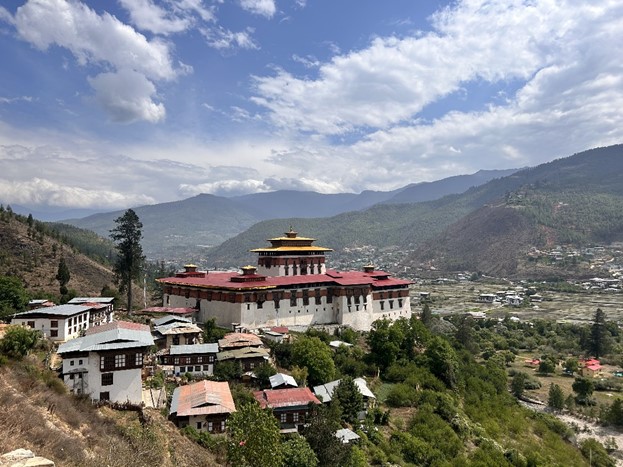
Paro Dzong (Rinpung Dzong): A fortress-monastery where monks chant in crimson robes while administrative work continues quietly.
Evening tip: Take a walk through Paro town. Try momos or a bowl of thukpa at a local eatery, browse handicraft shops, and soak in the slower pace of life. Stay in a guesthouse or small boutique hotel for your first Bhutanese night.
Day 2: Hike to Tiger’s Nest Monastery (Taktsang)
This is Bhutan’s crown jewel and a must for every traveller.
The Hike: About 2–3 hours uphill (4–5 hours round trip), starting early at 8 AM. The trail winds through pine forests with prayer flags fluttering in the wind. Horses are available for part of the climb if you need support.
The Experience: Legend says Guru Padmasambhava flew here on a tigress to meditate. Inside, flickering butter lamps and chanting monks create a spiritual atmosphere that feels worlds away from city life.
After the trek, treat yourself to a traditional hot stone bath—a wooden tub heated with fire-warmed river stones. If you’re curious, you can also try archery, Bhutan’s national sport, or join a cooking session to learn how ema datshi (chilli cheese curry) is made.
Day 3: Paro to Thimphu – Bhutan’s Capital with a Twist
The drive from Paro to Thimphu takes just 1.5 hours, but the scenery will make you want to pause. Thimphu feels modern yet deeply traditional—here’s where you’ll see monks in monasteries and young Bhutanese sipping coffee in trendy cafés.
Memorial Chorten: A stupa where locals gather every day for prayers, spinning prayer wheels in devotion.
Buddha Dordenma: A massive golden statue overlooking the valley, filled with thousands of smaller Buddhas inside.
Folk Heritage Museum: Step into a 19th-century farmhouse and see how Bhutanese families once lived—mud walls, wooden tools, and open-hearth kitchens.
Centenary Farmers Market: Meet farmers selling red rice, dried chillies, and yak cheese. A great place to taste Bhutanese flavours and interact with locals.
Evening idea: Attend a cultural show with folk dances and songs, where your guide can explain the stories behind the masks and movements.
Day 4: Thimphu to Punakha – Through Dochula Pass
This drive is easily one of the most beautiful in Bhutan.
Dochula Pass: Stop here for tea with views of the eastern Himalayas, framed by 108 white chortens. On clear mornings, the panorama is breathtaking.
Once in Punakha:
Punakha Dzong: Often called the “Palace of Great Happiness,” this fortress is stunning in spring when purple jacaranda trees bloom. It’s also where Bhutanese kings were coronated.
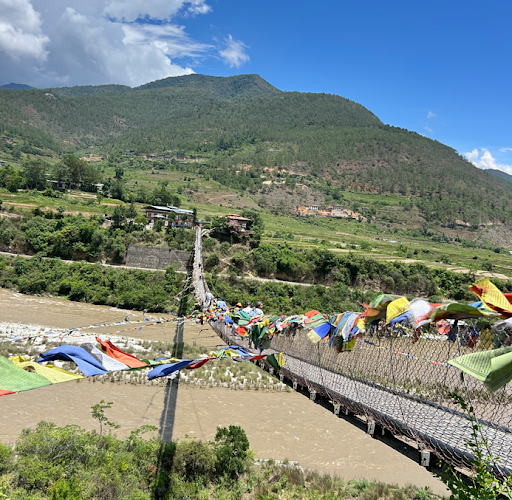
Suspension Bridge: One of the longest in Bhutan, strung with prayer flags over the Pho Chhu and Mo Chhu rivers. Crossing it is both thrilling and serene.
Chimi Lhakhang (Fertility Temple): Dedicated to Lama Drukpa Kunley, the “Divine Madman.” Couples come here to seek blessings for children.
For a more immersive experience, choose a farmhouse stay—sharing meals like red rice, butter tea, and home-style curries with a local family is a memory you’ll carry long after your trip.
Day 5: Back to Paro – A Gentle Goodbye
Return to Paro for your flight back to Bengaluru. Before you leave:
Kyichu Lhakhang: One of Bhutan’s oldest temples, where monks and villagers spin prayer wheels in quiet devotion.
Handicraft Shopping: Pick up handwoven scarves, thangka paintings, or wooden crafts as souvenirs.
Final Meal: Don’t miss Bhutan’s fiery but comforting dishes—momos, thukpa, and of course ema datshi.
As your plane takes off, you’ll see the valleys and dzongs fading into the clouds. Five days may feel short, but Bhutan leaves you with a sense of peace that lingers long after you’re home.
Essential Travel Tips for Bhutan
Entry Rules for Indians:
Sustainable Development Fee (SDF): INR 1,200/- per person, per night.
Licensed Bhutanese guides and local taxis are mandatory.
Special permits are needed for regions beyond Paro and Thimphu (like Punakha).
Best Time to Visit Bhutan:
Spring (Mar–May): Blooming valleys and pleasant weather.
Autumn (Sep–Nov): Clear skies and vibrant festivals.
Winter (Dec–Feb): Quiet, fewer tourists, and snowy mountains.
Packing & Culture:
Carry warm clothes, even in summer—mountain weather shifts quickly.
Dress modestly when visiting monasteries (covered shoulders and legs).
Try local food—red rice, butter tea, and dried chilli dishes are staples.
Why This Trip Stays With You
A trip from Bengaluru to Bhutan is not about rushing through landmarks—it’s about slowing down. It’s about hearing monks chant at dawn, sipping butter tea with a local family, or standing on a suspension bridge as prayer flags flutter in the wind.
Five days here won’t just give you a holiday. They’ll give you perspective—a reminder that sometimes, happiness is found in simplicity.
FAQs
How many days are enough for Bhutan?
For a quick trip, 5–6 days covering Paro, Thimphu, and Punakha is ideal. If you have more time, consider adding Phobjikha or Bumthang for a deeper cultural experience.
What is the cost of a 5-day Bhutan trip from Bengaluru?
Besides flights, factor in INR 1,200/- per person/night for the SDF, accommodation (budget guesthouses to luxury hotels), meals, and guide fees. On average, a mid-range 5-day trip may cost INR 45,000/- – 60,000/- per person.
Is the Tiger’s Nest trek difficult?
It’s moderately challenging but doable for anyone with average fitness. Horses are available for part of the way, but walking gives you the full experience.
Can Indians travel to Bhutan without a guide?
No, as per the new rules, Indian travellers must hire a licensed Bhutanese guide and use local taxis.
Do Indians need a visa or special documents to enter Bhutan?
Indian citizens do not require a visa to enter Bhutan, but must carry either a valid passport with at least 6 months’ validity or a Voter ID card to obtain an entry permit on arrival.
Is vegetarian or non-vegetarian food easily available in Bhutan?
Vegetarian food is widely available throughout Bhutan, and the country is also known for its flavorful non-vegetarian dishes such as Ema Datshi (chillies and cheese) and Phaksha Paa (pork with radish and chillies).
What currency is used in Bhutan, and is the Indian Rupee accepted?
Bhutan uses the Ngultrum (BTN) as its official currency, but Indian Rupees (INR) are accepted everywhere. However, notes of denominations above INR 500/- are usually not accepted.
At ClearEast Trip, we believe travel should feel effortless and deeply personal. We don’t sell fixed packages—instead, we help you design journeys across Bhutan, Darjeeling, Sikkim, and Northeast India with clarity, comfort, and care at the heart.
If you’re planning your Bengaluru to Bhutan trip, our role is to guide you with honest insights, local knowledge, and practical planning support—so your journey feels less like logistics and more like discovery.
☛ Ready to plan your Bhutan journey with clarity? Reach out to us, and let’s shape a Bhutan itinerary that feels truly yours.
Tucked between the Himalayan foothills and the northern plains of Bengal, Dooars is where the landscape exhales. Wide rivers curve through dense forests, elephants wander through tall grasses, and tea estates stretch beyond the mist. It’s a region of calm — a place where nature still sets the rhythm.
The word Dooars comes from “doors” — and it’s true. This land opens into Bhutan and Northeast India, but it’s also a quiet gateway into a slower, more grounded way of travel.
How to Experience Dooars Authentically
Start with the tea. Visit estates in Chalsa or Malbazar early in the morning — when dew still clings to the leaves and the air smells of earth and leaves. Locals will invite you in for tea, not as a formality, but as a gesture that matters.
Wildlife in Dooars isn’t rushed. Take time to visit the sanctuaries — Jaldapara, Gorumara, or Buxa — with the right local guide. It’s not just about spotting animals, but understanding the land they live in.
And wherever you go, pause by a river — the Torsa, Teesta, or Jaldhaka — and just listen.
Places to Visit
Jaldapara National Park – Known for its population of one-horned rhinos and elephant safaris.
Gorumara National Park – A lush habitat for bison, elephants, and birds.
Chalsa – A calm tea-growing area nestled between forests and hills.
Buxa Tiger Reserve – A historic reserve with ruins of Buxa Fort and remote trails.
Malbazar – A local town with access to nearby estates and riverside villages.
What to Eat and Celebrate
Food here is hearty and local — tied to indigenous and Nepali-influenced traditions.
Panta Bhat – Fermented rice soaked overnight, eaten cold with mustard oil and chili.
Fish Curry – Made fresh with river fish, turmeric, and green chilies.
Sel Roti & Gundruk – Nepali-origin dishes common in the tea worker communities.
Festivals to witness:
Durga Puja – Celebrated across towns with music, lights, and shared meals.
Diwali & Tihar – The Festival of Lights, with local flavors and unique Nepali rituals in villages.
Culture and Local Life
Language: A mix of Bengali, Nepali, Adivasi dialects, and Hindi.
Community: Many families here have lived and worked on tea estates for generations.
Daily life: Starts early, ends with river sunsets, and is rooted in land and labor.
Travel Tips
Use authorized local guides for safaris — they know the land and respect the animals.
Carry insect repellent, especially if you’re visiting forest areas.
Respect local customs — small villages value courtesy and modesty.
Footwear matters — bring good shoes for forest walks or riverside treks.
Stay in eco-conscious lodges or homestays when possible — it supports the region directly.
Did You Know?
“Dooars” refers to the 18 gateways into Bhutan — once used by traders and travelers on foot. Even today, parts of this region feel untouched by time, where forest trails and tea paths still connect communities.
Gently Explore
If you’re looking for a quieter place — one where rivers outnumber roads and mornings start with birdcall — Dooars might be it. We’re here to help you plan a trip that’s simple, local, and tuned to the rhythm of the land.
Our journey ideas and travel tips are always available when you’re ready.